By Jonah Cashel, Copy Editor
[Netflix; 2023]
Rating: 9/10
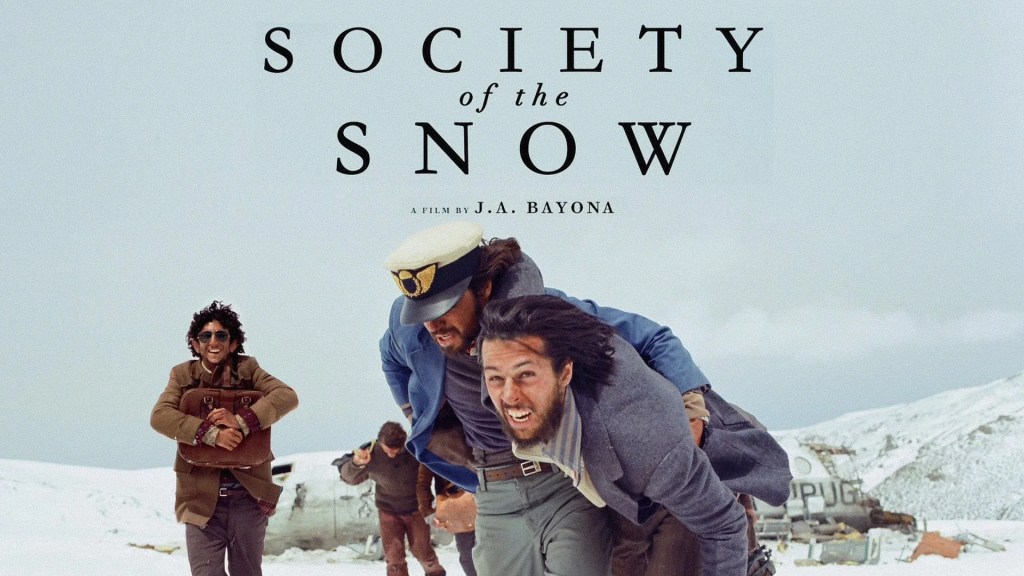
Society of the Snow (or La Sociedad de la Nieve) tells the true story of a Uruguayan Catholic school rugby team whose plane crash landed in the Andes Mountains on a chartered trip to Chilé in October of 1972. Of the 40 passengers on the plane, including families and friends of the team and a few others, only 16 made it off the mountain. Those 16 survivors managed to stay alive in one of the world’s harshest environments for roughly two entire months. If you’ve never heard of this event before, I highly recommend reading into it, as it is one of the most harrowing yet inspiring tales of human survival ever to occur in history. Or you could just watch this incredible film.
Society of the Snow is based off of the novel by Pablo Vierci, Society of the Snow: The Definitive Account of the World’s Greatest Survival Story, which draws on exclusive interviews from survivors of the accident. This makes the film far more authentic than the other two films, also based on novels, centered around this event; Alive (1993) and Survive! (1976). This film stands out as the most accurate and earnest account thus far, for several other reasons I will get into later.
Alive is the more well known of the two past films, partly because it stars Ethan Hawke as Nando Perrado, the hero of the story who made the final trek out of the mountains that ultimately rescued the other survivors. While also a great film, Alive falters in the beginning and end of the story. It gives little backstory on the survivors, instead opting to jump right into the crash in the first 15 minutes of the runtime. It also almost completely cuts out the painfully long journey (over 50 miles up harsh mountain peaks) Perrado had to make to escape. This is understandable as there is so much that happens in the two-month span of the story, but Society of the Snow gives ample time to every step. Alive also unfortunately suffers from some cheesy 90’s writing that subtracts from the extreme gravity of the situation.
Read more: Movie Review: Self Reliance
Society of the Snow takes every heart-pumping aspect of this story and turns it up to 100. Benefiting from the impeccable disaster movie directing of J.A. Bayona, as well as modern filming techniques, this film plunges the viewer into the sub-zero mountain environment without mercy. It begins in Montevideo, framing the personalities of the characters as a group of fun-loving youthful college students perfectly before getting into the meat of the story. Everything from the camera shots, to the costume design, to the soundscaping was meticulously crafted to be as realistic as possible. Much of the film was actually shot on site at the original scene of the crash, an absolute feat for modern film-making. This allowed the film to capture the utter silence and desolate nature of the Andes, as well as making the cold environment truly stand out. The film also benefited from a cast of relatively unknown actors, which really enhanced the suspension of disbelief.
The narration for most of the film centers around Numa Tarcotti, one of the rugby players who tragically passed away toward the end of the two months. This is a really poignant choice for the film, as Tarcotti remains one of the more solemn and pensive survivors throughout. When they are forced to resort to cannibalism in order to survive, Tarcotti is one of the last holdouts to refuse. His inner narration does an incredible job highlighting the extreme conflict faced by the survivors between starvation or the greatest taboo. Amongst all the tragic deaths that mark the film, his passing truly captures the weight of each passenger’s passing and the extreme hardships experienced by them all.
This is the point where Nando Perrado (who, by the way, started out with extreme life-threatening injuries from the initial crash) takes over as the narrative focus, and his determination to get off the mountain thrusts the viewer through the back half of the film as he fights tooth and nail to walk to salvation. When he finally reaches civilization, the crushing emotions built up from the start all come tumbling down in a moment that is sure to bring tears to your eyes. In the final minutes of the film in which the last survivors are reunited with their families, the absolute mastery this film upholds throughout really solidifies.
I can’t sing the praises of this movie enough. As a nonfiction story of tragedy, it captures the perfect balance between pulse-pounding captivating drama and respectful accuracy. The film is populated with real photographs taken during their time on the mountain, as well as original black&white footage of the final rescue mission. Future disaster movies ought to take note of this realism. Meanwhile, as those lucky enough to be able to experience such an incredible event from the comfort of our own homes, it is a privilege to see such a high quality recreation of this deeply inspiring story.




 ACRN.COM
Leave a comment