By Grace Koennecke, Managing Editor
I can remember the first time I ever listened to Lady Gaga, and it was when “Poker Face” came out in 2008. To my surprise though, my love for the singer didn’t fully evolve until after the release of her 2017 documentary Gaga: Five Foot Two. What I found so captivating about the film was how deeply misunderstood Gaga had become, not only as a musician but as a daughter, sister, granddaughter, lover and friend.
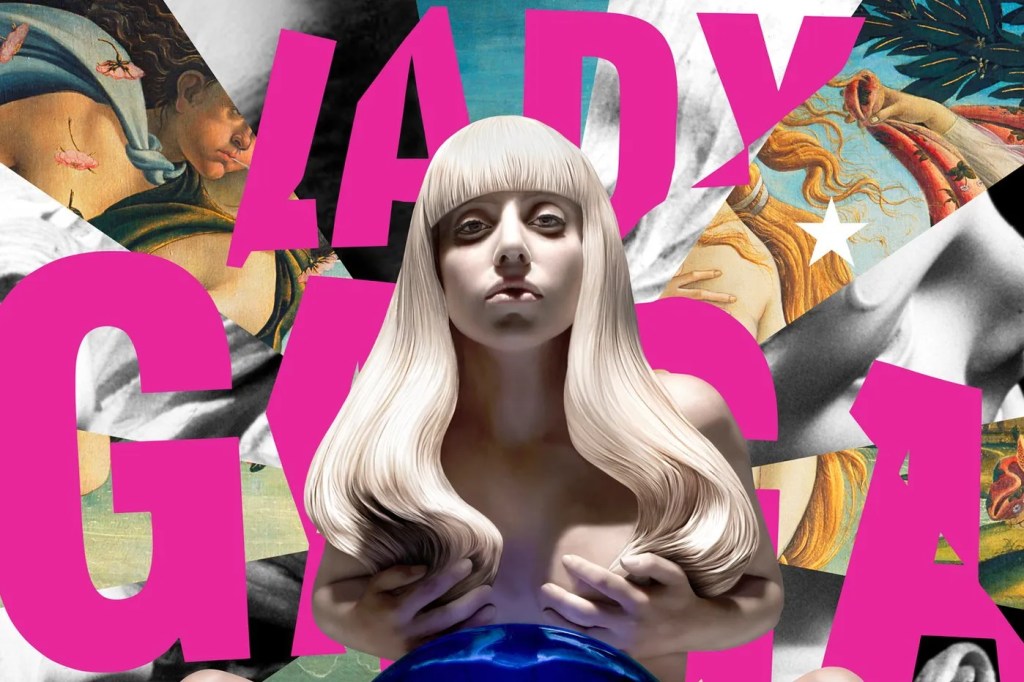
While Lady Gaga is a name in pop music that most critics argue will continue to live on thanks to the help of her most prominent albums, like 2009’s The Fame Monster and 2011’s Born This Way, my love letter this week views her career differently. As a loyal Little Monster, I argue Gaga’s most misunderstood music has solidified her as one of the genre’s most experimental and risk-taking artists of the last 10 years, seen predominantly on 2013’s ARTPOP, and that this album is what makes her legacy so worthwhile.
Read more: A Love Letter to After Laughter by Paramore
ARTPOP was released at a tumultuous time in Gaga’s career. Coming off the successful trail of Born This Way, the singer was privately struggling with a broken hip and synovitis. At the same time, her mental health was in decline, which her documentary focused heavily on, and thus her vision that she intended for the album was not executed to its fullest.
Unfortunately, ARTPOP’s album rollout also tarnished the reputation Gaga had as a singer, framing her instead as an unprofessional and insensitive performer, most noted during her infamous South by Southwest performance, where she had one of her dancers throw up on her. The singer additionally made poor collaborative choices, working with R. Kelly on “Do What You Want,” which the singer eventually apologized for in 2019. The song has since been removed from the album on all streaming services and from the album itself.
While it’s highly speculated Gaga’s lackluster and chaotic rollout for ARTPOP was in part due to her manager at the time, it also was high art that many simply just didn’t get when looking at the actual content of the album. Now, many critics praise the similar abrasive EDM party girl aesthetic found on much of ARTPOP fun and freeing in other recent successes like Charli xcx’s BRAT. But let’s face it: this album, along with countless others from the past 10 years, would’ve never happened if it weren’t for Lady Gaga.
This album has become my favorite of Gaga’s because of its eccentricity. It’s immediate when one hears the introduction of the first track, “Aura.” A song about killing her current pop star image and shedding her skin into the weirder and more deranged version of herself, Gaga drunkenly shouts at listeners to prioritize their authenticity. This sentiment bled into other songs, such as “Applause” and “Fashion!,” both tracks that saw the cheekier and campier side of the singer, which many thought was already done on previous songs, like “Judas” and “Bad Romance.”
However, the leading undertone of this album is that anything can be art, that being weird and different was more enjoyable for Gaga than being a version of herself that only aimed to please. The clear emphasis of Gaga’s intentions with this record was on the album’s title track, which included poignant lyrics such as, “A hybrid can withstand these things / My heart can beat with bricks and strings / My ARTPOP could mean anything” and “I try to sell myself but I am really laughing / Because I just love the music, not the bling.”
Beyond creating an interesting perspective about art and authenticity, Lady Gaga also candidly discussed sex and fame, bringing feminism to the forefront on tracks “G.U.Y.” and “Sexxx Dreams.” Accompanied with an iconic music video featuring the cast of The Real Housewives of Beverly Hills and talk show host Andy Cohen, “G.U.Y.” was a moment on the album that explored gender roles in the bedroom. Instead of being submissive and agreeable, Gaga urged listeners, particularly female-identifying ones, to be in control of their sexual needs, making this one of her best feminist anthems to date.
Meanwhile, “Sexxx Dreams” saw Gaga’s lyricism turn diaristic as she sang about having sexual desires for another woman while her lover was away. This is personally my favorite song on the album because it feels like you’re hearing two different sides to the mania Gaga has created, with one part of herself feeling shameful for being attracted to another woman while the other part wants to pursue a new sexual situation and partner. In all, it’s an important song in Gaga’s discography because it normalizes sexual freedom and choice, a sentiment the singer has always prioritized in her music and her fanbase.
Fame is addressed more so on songs like “Mary Jane Holland” and “Donatella.” The first track discusses conformity in the entertainment industry, an element of fame that Gaga simply told listeners she wouldn’t bow down to. This rejection of conformity has always been evident throughout her career – from wearing a meat dress at the 2010 MTV Video Music Awards to attending the 2011 Grammy Awards red carpet in a giant plastic egg – and “Mary Jane Holland” saw her embrace her creativity in a new way.
“Donatella” is more so an homage to fashion designer Donatella Versace, who has worked with Gaga throughout her fashion career. A more playful, comedic song on ARTPOP, it simply works because the singer truly embodied Versace, using her voice to imitate one of the wealthiest and most well-known fashion designers of our time. One can hear it in lines such as, “Donatella (I’m smokin’ ‘em on full tank of gas) / Mi-mi-bella (I’m a rich bitch, I’m the upper class),” and it was sonically different than previous songs where Gaga took on a new persona.
Even though this era for Lady Gaga was at times very controversial and unsettling, it was also a time for the singer to break away from the expectations the media, her management and herself were putting on her and her talent. Instead of making another album that followed a steady, dark industrious sound she had been known for in her last two albums, ARTPOP was the catalyst for Lady Gaga’s future, allowing her to explore the weirder and darker parts of herself than before. This album would lay the foundation for more revealing and genre-bending works for the singer, which later came in 2016’s Joanne and 2020’s Chromatica.
ARTPOP is an album for me that I’ve always returned to when I simply need music that is fun, exciting, and yes, weird. I think deep down it has also allowed me to embrace my love for eccentric pop music and artists. Lady Gaga has been, and always will be, one of my inspirations because of her courage to be different in and outside of her music, and ARTPOP dares all listeners to do the same.
Listen here: https://open.spotify.com/album/2eRJUtI7nXrQ5uYQ7tzTo9?si=FjXW9hvZRXSMIiKsCcKXvA&nd=1&dlsi=3d6dd80fa2854747
 ACRN.COM
Leave a comment