By Grace Koennecke, Managing Editor
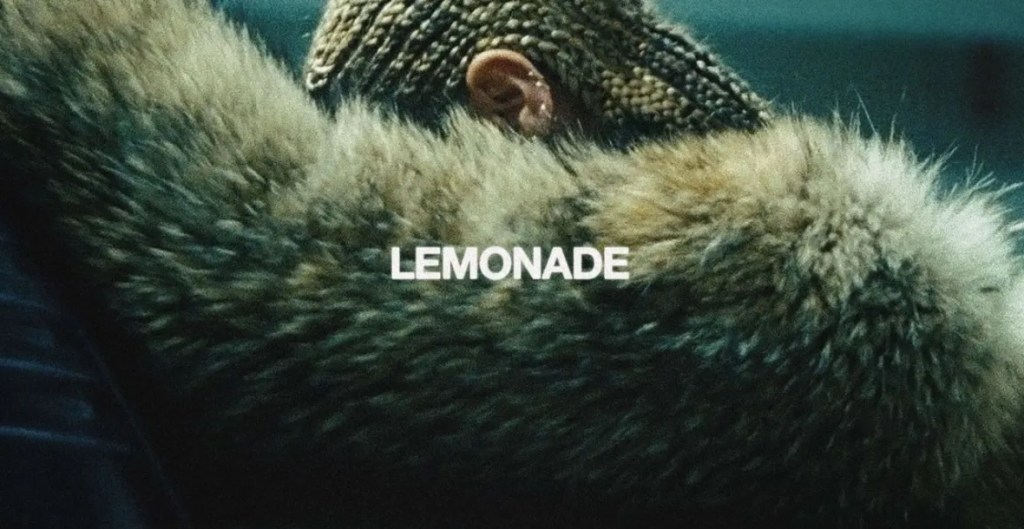
“I had my ups and downs, but I always had the inner strength to pull myself up. I was served lemons, but I made lemonade,” said Jay-Z’s grandmother Hattie White at the end of “Freedom (feat. Kendrick Lamar)” by Beyoncé. This line was the central theme of Beyoncé’s Lemonade, which was released in 2016. The album focused on several stages of grief: denial, anger, bargaining, depression and acceptance, which at the time was what the singer was experiencing after infidelity issues with her husband and rapper Jay-Z.
While one could argue that making songs inspired by Jay-Z had been seen previously in Beyoncé’s music, such as in 2011’s “Countdown” or 2013’s “Partition,” Lemonade was different in the fact that it related more to women who had been in the same position as Beyoncé, inspiring women of color to speak up and find their own liberation and power. It also totally humbled Jay-Z. Dude, you’re married to Beyoncé!
Read more: A Love Letter to ARTPOP by Lady Gaga
Before I fully jump into this album, I cannot talk about it without thanking my friend Annie, who reignited my love for Beyoncé back around the time of this album’s release. We used to ‘argue’ about music back when I never had the knowledge or research to back up my opinions, and now I’m so glad that she humbled me when it came to all things Beyoncé. Since she opened my eyes, I have always admired Beyoncé for how detailed and purposeful she is in her music, always releasing bodies of work that fit with the time period and hold a powerful message. There’s a lot of layers to Lemonade, so this week’s love letter will attempt to dive into why this album is so important and refreshing, even if it came out almost nine years ago.
Denial was the first stage of grief Beyoncé dove into on the album, particularly with “Pray You Catch Me” and “Hold Up,” which also acted as the first chapter of Lemonade. The opening track was a slow orchestral ballad layered with Beyoncé’s echoes, where the singer confronted her marital struggles: “You can taste the dishonesty / It’s all over your breath / As you pass it off so cavalier / But even that’s a test.” The emotional weight heard was striking, as Beyoncé questioned what her partner had been keeping from her: “What are you doin’ my love?”
Moving into “Hold Up,” Beyoncé clearly was struggling to process the grief of the situation, using this track to explain to listeners how loyal of a lover she is. In the accompanying music film for the album, this song was one of its peaks as Beyoncé ran around in a stunning mustard-colored gown with a baseball bat, smashing car windshields and fire hydrants. This symbolized the disruption in the singer’s life, going into denial as she asked listeners, “Can’t you see there’s no other man above you? / What a wicked way to treat the girl that loves you.” With “Hold Up,” the singer truly explored denial in a way that was not always discussed in the public eye, begging the question of why loyal and sacrificing women, and in this case wives, are treated unfairly in marriages.
The second chapter of Lemonade flowed smoothly into the second stage of grief: anger. “Don’t Hurt Yourself (feat. Jack White)” was one of the most interesting songs on this album because Beyoncé unleashed a beast in her that was quite shocking and unsettling on first listen. For someone who is famously private and reserved in public, the singer’s shouts and screams only emphasized how hurt she truly was, letting out all of her inner rage that came with feeling betrayed. My favorite line, and probably one of the most poignant on the album, is in this song, which served as a “final warning” to Jay-Z: “If you try this shit again (Don’t hurt yourself) / You gon’ lose your wife.”
“Sorry” was essentially the same premise as the previous track, but instead explored Beyoncé’s lack of empathy for her husband and his choices. This track initiated the third chapter of the album and the third stage of grief: bargaining. Singing from a detached place, the singer used this track to simply say she’s moving on, telling listeners that women should put their happiness and sanity first over a man’s. Beyoncé was trying to bargain with herself in this track, convincing herself that she was happier without a man, and that her independence mattered more. However, the end of track revealed she still thinks about her husband, wondering if he’ll ever own up to his mistakes.
Towards the middle of the album, Beyoncé transitioned into the fourth chapter and stage of grief in Lemonade: depression. The singer used “6 Inch (feat. The Weeknd)” to equate herself to a stripper working for money, trying to distract herself from her husband’s infidelity by working overtime and focusing on her career. Interestingly, in the music film, Beyoncé showed no emotion during this song as she sings of wanting to find happiness in her success, but feels detached from her career and her family. She begs her husband to come back at the end of the song, which is the breaking point on the album as Beyoncé’s voice cracks and goes quiet.
What would later be seen as foreshadowing to Beyoncé’s “COWBOY CARTER,” “Daddy Lessons” was the first time the singer created a country song about intergenerational trauma. Remembering the issues her own father had with infidelity, Beyoncé weaved this song into Lemonade, and this specific stage of the album, to compare the trauma she experienced because of her father to the trauma she was currently experiencing because of her husband. It also represented a sign of forgiveness, as Beyoncé had forgiven her father for his actions, as well as her husband, but now knows not only will she still live with trauma, but her own children will as well.
An honorable mention definitely goes to “Sandcastles,” a gut-wrenching reflection on Beyoncé’s marriage and the pain of infidelity. It’s also one of the most poetic songs on the album, as the singer equates the ups and downs of her marriage to a sandcastle being built and washed away by waves. She sings, “We built sandcastles that washed away / I made you cry when I walked away / Oh, and although I promised that I couldn’t stay, baby / Every promise don’t work out that way, oh, babe,” and this also alluded that while the singer wanted to leave her marriage at one point, the love she still had for her husband made her stay.
Beyoncé purposely ended on a hopeful note in the last chapter and last stage of grief on the album: acceptance. After taking much of the album to process what has happened to her, her family and countless other women of color, the singer had acknowledged the denial, anger, bargaining and depression she’d faced, now wanting to move on and trust again. This sense of acceptance is most heard on “All Night,” another jazz-infused ballad about reconnecting with her husband. Overall, it’s a beautiful love song, and it definitely was heartwarming in tone after an album consumed with dark, depressive and manic energy.
The ending note was “Formation,” a feminist anthem about overcoming critics and working hard despite what life may throw at you. I believe this song ties all the way back to what Jay-Z’s grandmother says halfway through the album, as Beyoncé has had to experience many more obstacles in her life and career as a black woman, musician, daughter, wife and mother. It also ties into the bigger picture of the album that women of color have had to experience years of intergenerational trauma and abuse, and that reclaiming their independence, power and autonomy is now more crucial than ever.
For someone who is a newer fan of Beyoncé, this album personally solidifies why her music is so important. Lemonade sticks with me because it explores the realities of womanhood that go untold, especially when it comes to marital struggles and power dynamics. I think Beyoncé’s intentionality with this album was so that women of color could see someone as successful as her be so honest and vulnerable in mainstream media and pop culture. As one of the most beloved and hard-working musicians of our time, Beyoncé’s artistry is simply unmatched, always recentering the focus on issues, identities and experiences that go unnoticed in a predominantly white and male industry.
Listen here: https://open.spotify.com/album/7dK54iZuOxXFarGhXwEXfF?si=ajIX0oj2TeKQnv2wMKv0Tg&nd=1&dlsi=b8f81c1959f14bc3




 ACRN.COM
Leave a comment