By Grace Koennecke, Managing Editor
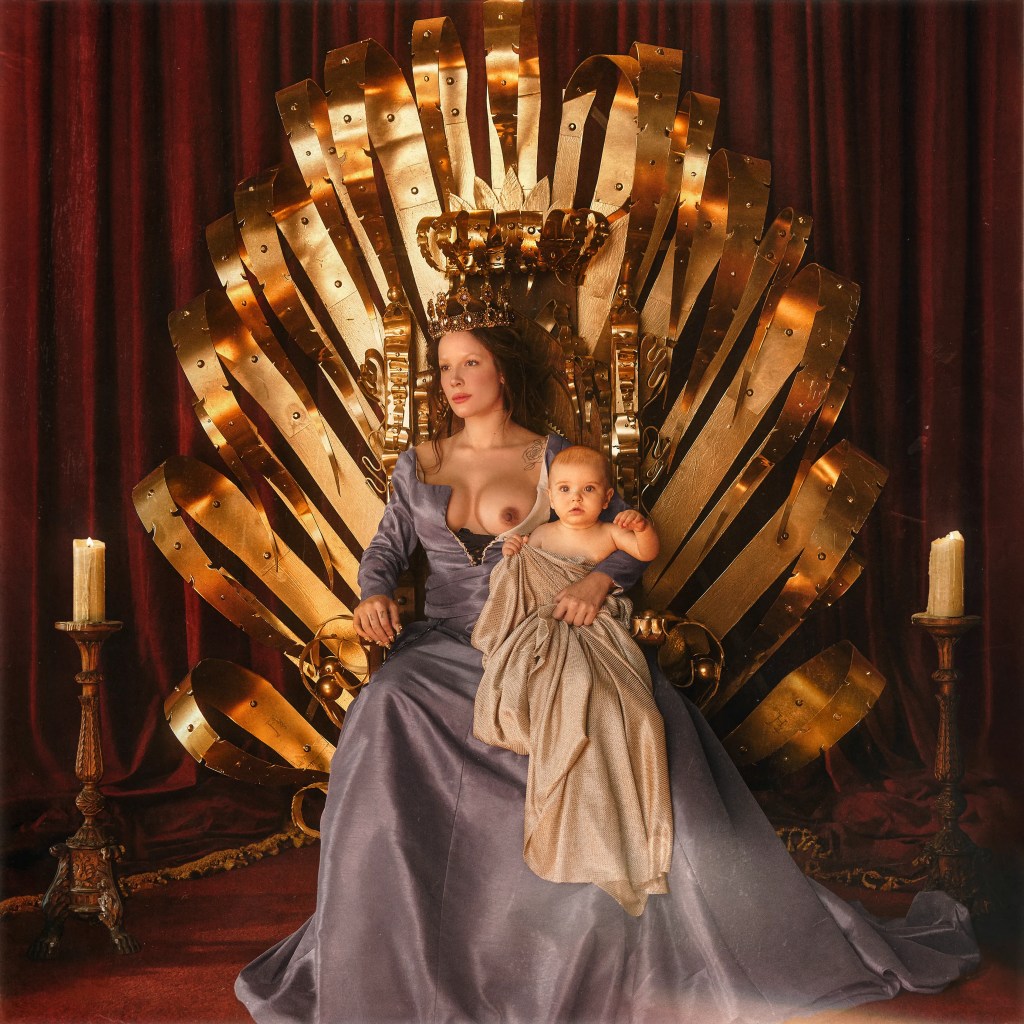
With the COVID-19 pandemic forcing many artists to create in isolation, Halsey was already quietly working on what would be their fourth studio album, 2021’s If I Can’t Have Love, I Want Power. Starting in June of 2020, the singer-songwriter from New Jersey was fresh off the release of their third album, Manic, a much more chaotic array of songs that reflected Halsey’s struggles with bipolar disorder.
However, this new project would be a complete 180 in terms of sound and themes, with Halsey enlisting Nine Inch Nails’ Trent Reznor and Atticus Ross to help produce the record and creating an accompanying music film. Even more impressive, Halsey was pregnant right up until the release of the album, making If I Can’t Have Love, I Want Power mostly on their own.
Read more: A Love Letter to how i’m feeling now by Charli xcx
This album gets a love letter dedicated this week because of how much effort Halsey put into it, and you can hear it in each track. Returning to a more grunge, industrial sound – hence where you can tell Reznor and Ross added their special touch to the album’s 13 tracks – this album is so important to me because it truly discusses the horrors of womanhood that usually are undermined. With lyrics focused on the pain and beauty of pregnancy, the longing and suffering that come with falling in and out of love and the yearning to be shown respect and grace in the public eye as a woman, Halsey created a still timely and poignant album that is arguably their best.
The opening track of this album is chilling, called “The Tradition.” It tells the story of a young woman who is bought and sold to a suitor, finding that her life goals are not playing out as she initially thought. A metaphor for fame, Halsey tries to reclaim the life they want by using the chorus to push listeners to advocate for themselves: “Take what you want, take what you can / Take what you please, don’t give a damn / Ask for forgiveness, never permission.”
From there, the track slowly bleeds into the pulsing backtrack of “Bells in Santa Fe,” one of my personal favorites from the record. With lyrics like, “Don’t call me by my name / All of this is temporary,” it serves as an allusion to one of Halsey’s favorite films, Spirited Away. Like the film’s main character Chihiro Ogino, who is also known as Sen, the singer actually goes by Ashley outside of fame.
As the film discusses losing one’s identity by taking on a new persona, Halsey uses this allusion to suggest to listeners that she knows her music career will only last so long in today’s world of overconsumption and small attention spans, and that female artists have to constantly grab people’s attention to stay relevant.
Halsey switches gears completely on “Easier than Lying,” using heavy bass and gravelly vocals to explain their complicated relationships with their parents and past lovers. The tone of the song is soaked in rage, and it’s one of the peaks of this album early on because Halsey doesn’t hold back on telling off the people that have turned them into a more miserable and paranoid version of themselves. They sing, “Losing you is easier than / Lying to myself that you love me,” and this line in particular is haunting in itself because the singer has experienced loss in a way that has made them more skeptical and hopeless about their future relationships.
Further into the album, Halsey begins to reflect on their pregnancy and becoming a mother, especially heard on “You asked for this.” The chorus repeatedly goes, “Go on and be a big girl / You asked for this now” and there’s a hesitancy in the singer’s tone as they contemplate what they truly want out of life. While Halsey has always wanted a child, they wonder if they’re having a child with the right person or at the right time, common worries that plague many women throughout pregnancy.
It also is a song about the expectations set up for women in society, as young girls and women are not supposed to show weakness or be overly emotional. Through the chorus as well, Halsey is aware that women are not taken seriously if they do not “act” mature or reserved, begging the question if women are allowed to do anything at all without being scrutinized, especially as a public figure.
A super wholesome moment on the album comes next with the lullaby “Darling,” which was dedicated to Halsey’s son. After years of infertility struggles, the singer thanks their son for allowing them to have a new purpose in life, as well as for changing their mindset about the world. They sing, “Darlin,’ don’t you weep / There’s a place for me / Somewhere we can sleep / I’ll see you in your dreams” and “But only you have shown me how to love bein’ alive,” lines that prove how much Halsey has wanted to be a mother and how much they love their son.
Another high point on the record is “honey,” a song about having chaotic and addictive desires for another woman. Originally starting as just a writing exercise for the singer, Halsey eventually finished the track for the album with producer John Cunningham. Remembering their intimate relationship, Halsey seems to have been forever changed by the woman they sing about, and it uses similar production to “You asked for this” and “Easier than Lying” that makes the song have a grunge early 2000s aesthetic to it.
“I am not a woman, I’m a god” is one of the biggest songs on the record in terms of theme, with Halsey using this song as the only lead single off the record before its release. In an interview with Zane Lowe, the singer said, “Also, not for nothing, but the lead single is ‘I am not a woman, I’m a god’ – it’s not a girl power album. From the jump, I’m like, ‘I’m not a woman.’ I’m not saying any of that. There’s no girl power in this album. … Being pregnant, writing this album, people are expecting girlishness, you know what I mean? And any time where I ever talk about womanhood, motherhood, femininity, I’m usually talking about it with a taste in my mouth. Like, go be a big girl, a girl is a gun, all I can taste is the blood in my mouth.”
In terms of production, Reznor and Ross transformed the track into a dark and heavy synth-backed track, intentionally not adding too many layers besides Halsey’s vocals. Its placement towards the end of the album is fitting, as it questions gender and sexuality as well. The singer, who uses she/they pronouns, doesn’t necessarily identify with femininity and being a woman, and instead believes their role as a human is to speak up and fight for injustice, hence other lyrics like, “I’m not a martyr, I’m a problem.”
The final track I believe worth discussing is “The Lighthouse,” which is the second to last track on If I Can’t Have Love, I Want Power. Based on a painting the singer posted to their Twitter earlier in 2021, Halsey uses the common tale of a siren and a sailor, with the two becoming intertwined in a seductive and toxic relationship. It’s evident that Halsey experienced abuse, alluding to her past abusive relationship with rapper G-Eazy.
The singer includes lyrics, such as, “He was tall and mean with venom eyes so green / Wanted reconciliation, but my tongue was in my teeth / I couldn’t find the floor, so I was kickin’ with my feet / But they weren’t there, they were stolen.” Eventually escaping the relationship, Halsey revels in their own anxiety and guilt they feel for staying, which the production imitates by creating a rising and swelling sound of waves at the end of the song. It ends on an eerie and suffocating note with the repetition of lyrics, “And the waves come crashing down,” with Halsey wanting to drown out any of the pain the relationship caused them.
When re-listening to this album four years later, I’m still so in awe of how Halsey created a world so deeply personal and relatable for listeners, even if there are several elements of fiction and fantasy. I’ve always gravitated to Halsey’s music because their writing is so poignant and poetic, and it feels like I can also relate to the singer as a woman who has experienced the annoyances that come with being one.
Overall, this album is extremely important to me because it is an honest account of womanhood and motherhood, and I think everyone, especially women, need to listen to this record in a time where women’s rights and autonomy are at risk.
Listen here: https://open.spotify.com/album/1o8ExR66PcMb1h8a1nhi9k?si=OAy6yOMSSwqzoKSxPgfi2w
 ACRN.COM
Leave a comment